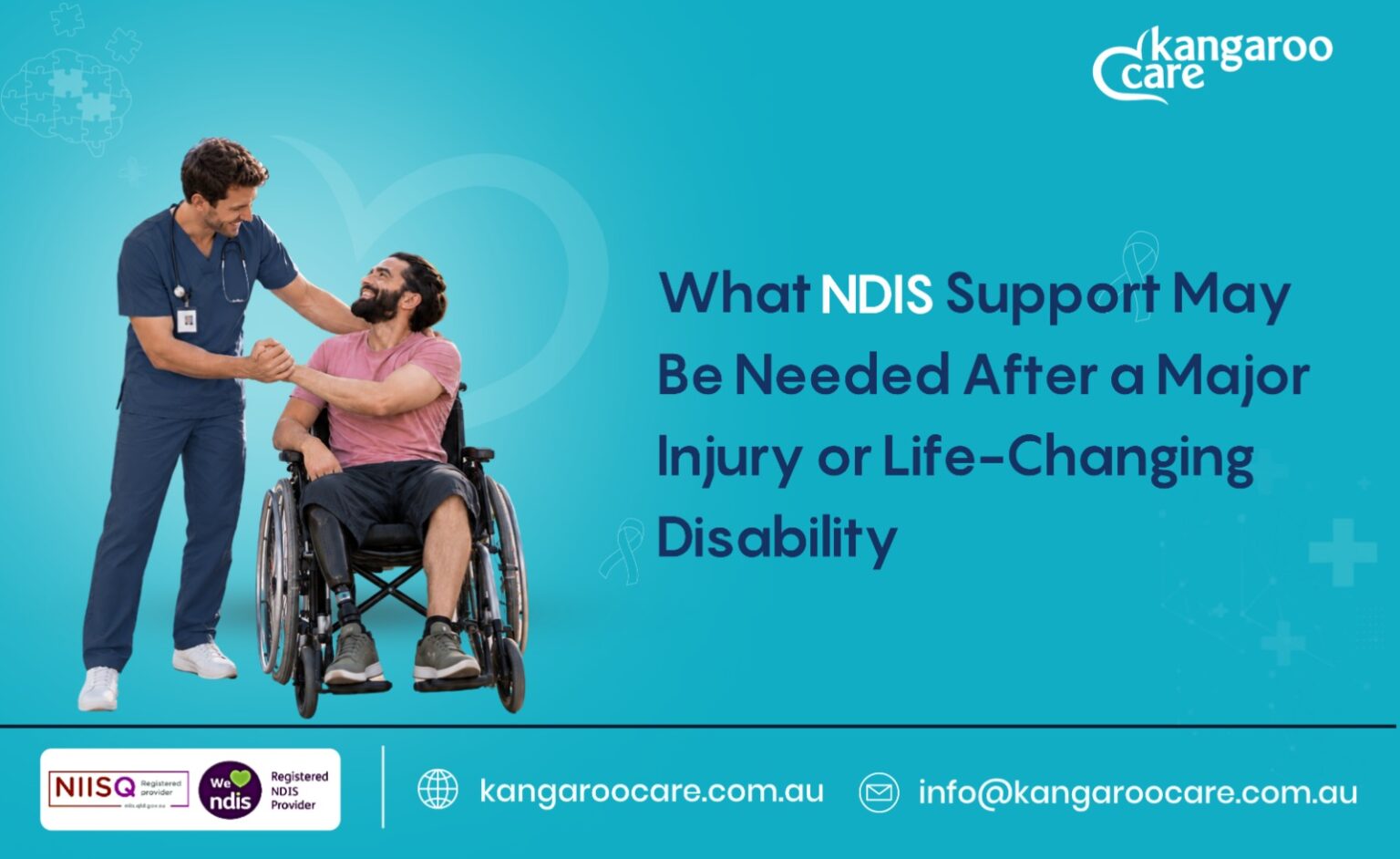
A major injury can change how you manage the most ordinary parts of your day.
Getting out of bed, having a shower, preparing a meal, moving around the house or getting back to work may suddenly become difficult. For some people, these changes are temporary. For others, an injury can lead to a permanent impairment and a long-term need for disability support.
For people in Brisbane, NDIS disability support Brisbane can become part of that longer-term picture when the person meets the NDIS eligibility requirements. What matters is not just the injury itself, but how it has changed the person’s ability to manage everyday life.
This can be especially important for people living with spinal injuries, traumatic brain injuries, stroke, neurological conditions, amputations or other disabilities that affect independence.
It is also where the right support provider can make a real difference. Kangaroo Care works with people who have complex support needs, bringing together doctors, nurses and trained support workers. The focus is on providing the right level of assistance while helping participants stay as safe, independent and involved in their own lives as possible.
How can a major injury change everyday life?
A serious injury can affect much more than mobility.
Someone who once managed their morning routine without thinking about it may now need physical assistance, prompting or supervision. Cooking may become difficult or unsafe. Getting to an appointment may require support. Returning to work or study may mean rebuilding routines that once came naturally.
Even things like shopping, doing laundry, cleaning the house or meeting friends can become more complicated.
And the change is not always easy to adjust to. Suddenly depending on someone else for tasks you used to handle yourself can be frustrating, tiring and emotionally difficult.
The NDIS looks at how an impairment affects everyday functioning. Under its disability requirements, an impairment generally needs to be permanent or likely to be permanent, substantially reduce functional capacity in areas such as mobility, self-care or self-management, and mean the person is likely to need NDIS support for their lifetime.
So, the name of the injury does not tell the whole story.
What matters is what the person can do now, what they need help with and how their disability affects everyday life.
What support might be needed?
There is no single support package that works for everyone after a life-changing injury.
Two people can have a similar injury and still need very different kinds of help. A better starting point is to look at what has actually changed in the person’s daily life.
Personal care and daily routines
Tasks that once took only a few minutes may now require assistance.
Depending on their needs, a participant may need support with:
- Showering, hygiene and grooming
- Dressing and undressing
- Toileting
- Eating and drinking
- Transfers between a bed, chair or wheelchair
- Following daily routines
- Relearning everyday skills
But good support is not about taking over everything.
Sometimes a person needs hands-on help. Sometimes they only need supervision or prompting. In other cases, having someone nearby gives them enough confidence to complete a task themselves.
That difference matters.
For someone looking for NDIS disability support Brisbane, it is worth asking how a provider balances assistance with the participant’s own choices and independence.
Support at home and in the community
The practical impact of an injury often continues long after the immediate recovery period.
Meal preparation, shopping, laundry, cleaning and other household tasks can become difficult when mobility, strength or coordination has changed. Getting out of the house can also require planning and assistance.
Then there is the social side of it.
Someone who used to meet friends, attend appointments, work or take part in community activities may suddenly find it much harder to do those things. That loss of routine can add another layer of stress to an already difficult situation.
Kangaroo Care’s end-to-end NDIS services cover areas such as daily living support, household tasks, community participation, travel and transport assistance, Support Coordination and community nursing. Having different types of support available through one provider can make things easier when several needs overlap.
Disability-related health and clinical support
A major injury can also come with ongoing clinical needs.
These might include wound care, catheter management, complex bowel care, enteral feeding, seizure management, tracheostomy care or ventilator support.
These are not ordinary household tasks. They require appropriate skills, planning, training and safeguards.
It is also important to understand that NDIS support does not replace the mainstream health system. Some healthcare services remain the responsibility of hospitals, GPs or other health services.
This is why a provider’s clinical capability can matter when support needs are more involved. Kangaroo Care’s team includes doctors, Registered Nurses, Enrolled Nurses, Clinical Nurse Consultants and trained support workers who work with participants with complex needs.
When does support become high intensity?
Some types of personal support involve a much higher level of risk and require workers with specific skills and knowledge.
The NDIS Commission identifies high intensity daily personal activities such as:
- Complex bowel care
- Enteral feeding and management
- Severe dysphagia management
- Tracheostomy management
- Urinary catheter management
- Ventilator management
- Subcutaneous injections
- Complex wound management
Workers providing these supports need appropriate training, including participant-specific training where required.
And high intensity support does not automatically mean that every task has to be performed by a nurse. What matters is whether the worker has the right skills, knowledge and training for the support they are providing.
For people looking for NDIS high intensity support Brisbane, these are important things to check before choosing a provider.
Kangaroo Care provides high-intensity and clinical support for participants with complex needs, including catheter management, tracheostomy care, ventilator support, seizure management, stoma care, complex bowel care, wound care and enteral feeding.
What does complex care actually look like?
“Complex care” can sound like a broad term until you are the person who needs it.
For a participant and their family, it often comes down to fairly simple questions:
Who understands the person’s support needs? Are the workers trained for the specific care involved? What happens if their condition changes? Is there a clear plan for risks or emergencies? Can the participant rely on a familiar support team?
These things become even more important when several types of support need to work together.
Kangaroo Care’s complex-care approach combines personalised support planning, clinical oversight and trained staff. Its services include high-intensity daily personal activities, clinical nursing care, complex mental health care, Supported Independent Living and clinical training.
When comparing providers for NDIS complex care Brisbane, it is useful to look beyond the list of services. Ask about the team’s experience, qualifications, communication, clinical oversight and how they respond when a participant’s needs change.
Support should build independence, not replace it
After a major injury, conversations can quickly become focused on what a person can no longer do.
There is another question worth asking:
What would help this person have more control over their life?
For one participant, it might mean learning to prepare a simple meal again. For another, it could mean managing their morning routine, travelling to work, going out with friends or becoming more confident with mobility equipment.
The right support should leave room for those goals.
This is particularly important when choosing NDIS support for complex disabilities Brisbane. Complex needs may require structured care, but that does not mean the participant should have less choice.
Support can still be built around their routines, preferences, relationships and personal goals.
That is an important part of Kangaroo Care’s approach too: providing the assistance someone needs without losing sight of their independence and long-term wellbeing.
Role of NDIS when support needs change suddenly
A major injury can change a person’s support requirements very quickly.
An arrangement that worked before the injury may no longer be enough. Even after support is in place, a person’s needs can change as their condition, abilities or circumstances change.
When explaining those changes, practical examples can be more useful than simply saying that someone’s condition has “got worse”.
It can help to look at:
- What could the person do independently before the injury?
- What can they do now?
- Which tasks require physical assistance?
- Where is supervision or prompting needed?
- Have any safety risks changed?
- How often is support required?
- What could help the person become more independent?
The NDIS may consider evidence about functional capacity and how disability affects everyday life. Functional capacity assessments can look at areas such as communication, learning, mobility, self-care, self-management and social interaction.
For families looking for NDIS disability support Brisbane, being clear about these day-to-day changes can also make conversations with providers much easier.
If circumstances have changed significantly, the participant can seek guidance from the NDIS about whether their current plan or support arrangements need to be reviewed.
Read more: What NDIS Services Are Available in Melbourne? A Guide for Participants
Choosing the right support provider
After a life-changing injury, choosing a provider is about more than finding someone who has a support worker available.
The provider needs to understand the person’s actual situation, especially when everyday disability support overlaps with clinical care.
Before choosing one, ask:
Does the provider understand similar support needs?
Experience matters when a participant has complex physical, neurological, behavioural or clinical requirements. A provider should be able to explain what experience their team has with similar situations.
Are workers trained for the support they provide?
For high intensity supports, ask what training workers receive and whether participant-specific training is provided where required.
Will the participant have a consistent support team?
A familiar team can make personal care and daily routines more comfortable. It can also make it easier to notice and communicate changes in the participant’s needs.
How does the provider respond when needs change?
Support needs do not always stay the same. Ask how the provider reviews support, communicates with families and responds when circumstances change.
Does the support plan include the person’s own goals?
Support should not become a list of tasks that someone else completes for the participant.
It should also consider what the person wants to learn, do, improve or get back to doing.
Why Kangaroo Care can be a useful choice for complex support
Kangaroo Care is a registered NDIS provider with a Brisbane presence and a clinical model led by doctors and nurses.
The organisation supports participants with physical, neurological, sensory, intellectual and psychosocial disabilities, including people living with conditions such as spinal injuries, stroke, motor neurone disease, multiple sclerosis and muscular dystrophy.
Its services include:
- End-to-End NDIS Services
- High Intensity Supports
- Clinical Nursing Care
- Complex Mental Health Care
- Supported Independent Living (SIL)
- Community Nursing
- Support Coordination
- Clinical Training Programs
Kangaroo Care also provides specialist clinical support for needs such as ventilator support, tracheostomy care, enteral feeding, complex bowel care, wound care and catheter management.
For someone with more involved support requirements, having clinical and everyday disability support available through the same organisation can make it easier to keep different parts of their care connected.
Kangaroo Care: End-to-End NDIS Support in Brisbane
Every participant’s situation is different.
Someone returning home after a spinal injury may need a very different combination of services from someone living with a neurological condition or another complex disability.
Kangaroo Care provides a range of NDIS services in Brisbane that can be shaped around those individual circumstances.
Depending on the participant’s needs and NDIS plan, these include:
End-to-End NDIS Services
Support across different stages of the NDIS journey, including daily living assistance, community participation and Support Coordination.
High Intensity Supports
Specialised support for participants who require complex clinical or personal care, including areas such as complex bowel care, catheter management, enteral feeding and respiratory support.
Clinical Nursing Care
Community-based clinical support for participants who require nursing expertise as part of their disability-related care.
Supported Independent Living
Structured support for participants who want to live more independently while receiving assistance with daily routines, life skills and maintaining a safe home environment.
Complex Mental Health Care
Specialised support for participants whose disability-related needs include complex mental health requirements.
Clinical Training Programs
Training and knowledge development to support safe and appropriate care.
The aim is simple: to make complex support more manageable for participants, families and the wider support team.
Find the right NDIS support with Kangaroo Care
A life-changing injury can change the way a person lives. But it does not have to decide what their life looks like from that point forward.
The right support can make everyday routines safer, reduce pressure on families, build confidence and help a participant work towards the things that matter to them.
Kangaroo Care provides personalised NDIS services across Brisbane, including specialist support for people who require complex, clinical or high-intensity care.
If you are exploring NDIS disability support Brisbane for yourself or a family member, Kangaroo Care can help you discuss your support needs and understand what services may be appropriate.
Contact Kangaroo Care
kangaroocare.com.au
Brisbane Head Office: Suite 4, Level 1, 1933 Logan Road, Mount Gravatt, Brisbane QLD 4122
Phone: 07 3435 1548
Email: [email protected]
FAQs
Can a major injury make someone eligible for the NDIS?
Possibly. Eligibility depends on whether the injury has caused a permanent or likely permanent impairment that substantially affects everyday life and is likely to require lifelong support.
What support might be needed after a major injury?
Depending on the person’s needs, this may include personal care, household tasks, community participation, skill development, Support Coordination and clinical or high intensity support.
What is high intensity NDIS support?
It includes complex supports such as bowel care, enteral feeding, tracheostomy care, catheter management, ventilator support and complex wound care.
Can NDIS support help someone become more independent?
Yes. Support can help participants build skills, manage daily routines, participate in the community and work towards their personal goals.
Can NDIS support change if a person’s needs change?
Yes. If a participant’s circumstances or support needs change significantly, they can contact the NDIS to discuss their current plan and support arrangements.
What should I look for in an NDIS provider?
Look at their experience with similar disabilities, worker training, clinical capabilities, consistency of support and how they involve participants in decisions about their care.
Does Kangaroo Care provide complex and clinical NDIS support?
Yes. Kangaroo Care provides services including high intensity support, clinical nursing care, community nursing, Supported Independent Living, Support Coordination and other end-to-end NDIS services.