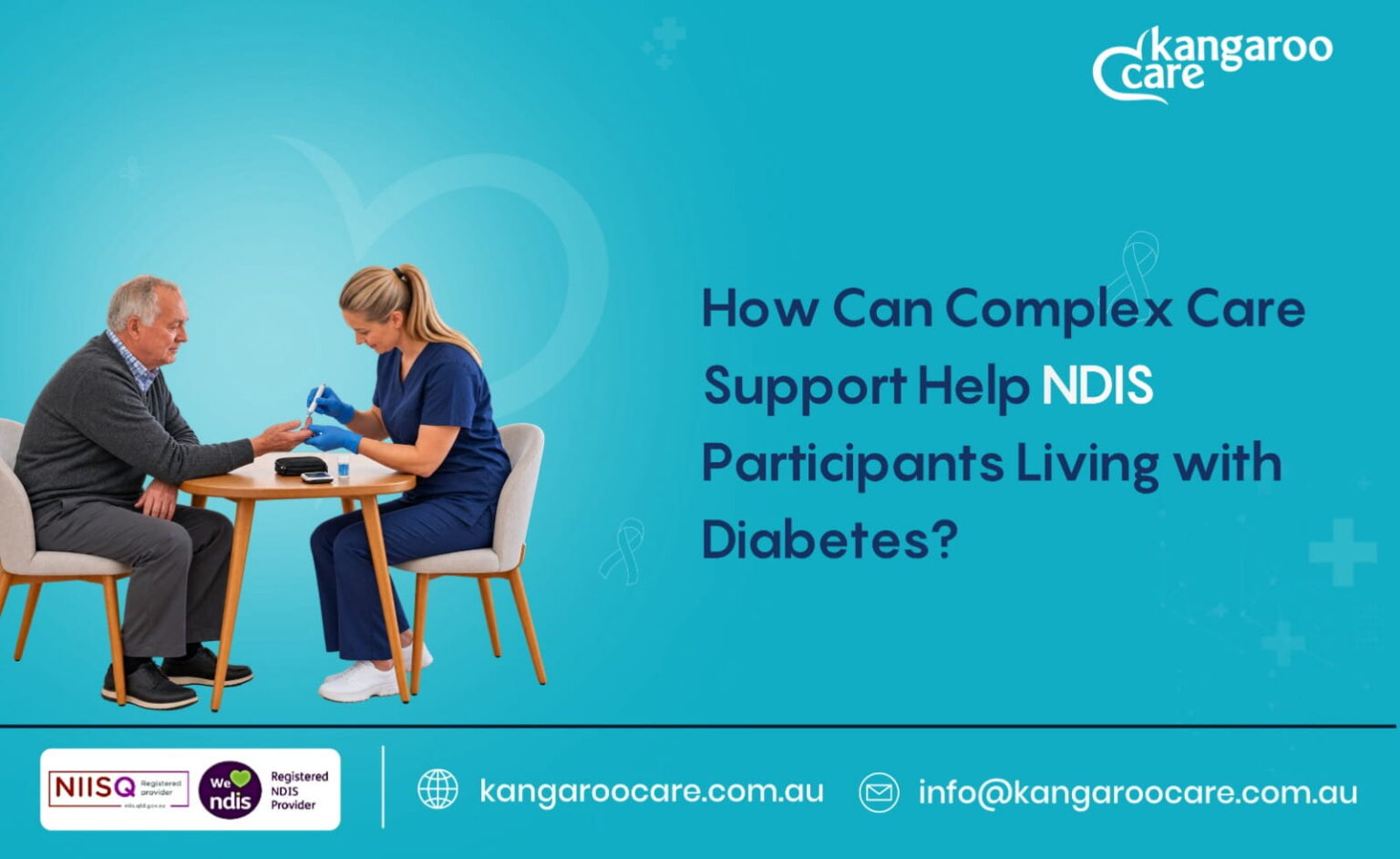
Living with diabetes involves more than keeping blood glucose levels under control. There are regular routines, appointments, meals and, for some people, diabetes-related tasks that need to be managed consistently.
For an NDIS participant who also lives with a disability, some of these everyday responsibilities can become difficult. Someone with limited hand movement may struggle to check their blood glucose. A person with an acquired brain injury may understand their diabetes care plan but forget parts of the routine. Another participant may need help getting to appointments or preparing meals because of mobility difficulties.
This is where NDIS complex care support may become relevant.
Diabetes is also a significant health issue in Australia. The latest AIHW data estimates that around 1 in 15 Australians, or about 1.3 million people, were living with diabetes in 2022–24. Diabetes was associated with 11% of all hospitalisations in 2023–24. However, having diabetes alone does not mean someone automatically qualifies for NDIS support.
For an NDIS participant, the important question is how their disability affects their ability to manage everyday activities and whether they have an approved need for disability-related support.
What Is Complex Care Support?
Complex care support is generally relevant when a person has more involved or ongoing support needs. What that support looks like can vary significantly between participants.
A person living with diabetes may also have an acquired brain injury, intellectual disability, mobility limitations or communication difficulties. These additional challenges can make ordinary routines harder to manage.
For example, a participant may know they need to follow a particular meal routine but struggle with planning because of a cognitive disability. Someone else may understand how to use their glucose monitoring equipment but have difficulty handling it because of reduced hand function.
The NDIS recognises diabetes management as a possible disability-related health support when it relates to a person’s disability and meets the relevant funding requirements. Support may involve appropriately trained workers, nurses or certain equipment, depending on the participant’s needs.
This does not replace mainstream healthcare. Doctors, diabetes specialists and other healthcare professionals remain responsible for medical treatment and clinical decisions.
How Can Complex Care Support Help Someone Living With Diabetes?
Diabetes management can involve several small tasks throughout the day. When disability makes one or more of these difficult, appropriate support can make the routine easier to manage.
1. Support With Daily Routines
Some participants may need help with personal care, preparing food, moving around the home or maintaining a regular routine.
The level of assistance can be very different. Someone with limited mobility may need hands-on help in the kitchen, while a participant with memory difficulties may mainly need prompting.
The aim is not to take over tasks the participant can still do themselves. If someone can safely complete part of an activity, support can focus on the part they find difficult.
2. Assistance With Diabetes-Related Tasks
The NDIS specifically recognises diabetes management as a possible disability-related health support.
The NDIS guideline gives examples such as support with checking blood glucose levels and following a Diabetes Care Plan. Where the relevant requirements are met, some participants may also receive assistance with other diabetes-related tasks.
For example, a participant with reduced hand coordination may understand their diabetes routine but struggle to use monitoring equipment independently. If the support meets NDIS requirements, an appropriately trained person may be able to assist.
This does not mean every support worker can perform clinical tasks. The worker needs appropriate training, experience and competency for the specific support.
In some circumstances, nursing support may be required, particularly where diabetes is unstable and the participant has complex disability support needs.
3. Assistance With Appointments
Getting to a medical appointment can be difficult when a participant cannot travel independently.
Someone with mobility difficulties may need help getting ready, leaving the house and travelling to the appointment. A person with cognitive or communication difficulties may need practical assistance during the journey.
A support worker can assist with these disability-related barriers within their role, while the healthcare professional remains responsible for clinical assessment and treatment.
4. Support With Meal Preparation
Food can be an important part of a person’s diabetes management plan, but preparing meals is not always straightforward for someone living with disability.
A participant may struggle with grocery shopping, standing in the kitchen, using utensils or remembering the steps involved in preparing a familiar meal.
For example, someone with an acquired brain injury might benefit from a consistent meal routine and prompting. A participant with a physical disability may instead need hands-on assistance with preparation.
Support workers should not create or change a medical diet plan. Specific nutritional requirements should come from the participant’s appropriate healthcare professional.
5. Supporting Independence
Needing assistance does not mean a participant has to give up control over their daily life.
Someone may still be able to choose their meals, prepare part of a dish, organise groceries or complete parts of their routine.
For example, a participant might choose what they want for breakfast and prepare some ingredients while receiving help with tasks affected by their disability.
Good support is about providing assistance where it is needed while allowing the participant to remain involved in their own decisions and activities.
When Might Someone Need NDIS Complex Care Support?
Not everyone living with diabetes will require complex care support.
It may become relevant when diabetes exists alongside disability-related difficulties that affect everyday activities or the person’s ability to manage certain health-related routines independently.
A participant may also experience:
- Mobility limitations
- Cognitive or memory difficulties
- Communication difficulties
- Acquired brain injury
- Difficulty with personal care
- Multiple disability-related conditions
- Difficulty accessing the community
- Difficulty following an established diabetes routine because of their disability
For example, a participant with an acquired brain injury may understand their diabetes care plan but regularly forget whether they have completed a particular task.
In this situation, the support needed is not simply because the person has diabetes. Their disability is affecting their ability to manage part of their everyday health routine.
What About Diabetes Support in Brisbane?
People searching for diabetes support services Brisbane will find both healthcare and disability providers, but these services have different roles.
A GP or diabetes specialist may review the person’s condition and treatment. A dietitian may provide nutritional advice. A disability support worker may assist with approved everyday activities or certain disability-related health tasks when appropriately trained.
These roles can work alongside each other.
For example, a healthcare professional may establish a Diabetes Care Plan, while a trained support worker helps the participant follow parts of that routine because their disability makes them difficult to manage alone.
For someone looking for NDIS diabetes support Brisbane, it is therefore useful to consider the participant’s disability and functional needs rather than focusing only on the diabetes diagnosis.
How Can Support Workers Assist NDIS Participants?
An NDIS support worker Brisbane may provide different types of assistance depending on the participant’s approved support, abilities and the worker’s training.
This may include:
- Personal care and daily activities
- Meal preparation
- Household routines
- Community participation
- Transport-related assistance
- Support with established routines
- Certain disability-related health supports where the worker has appropriate training
The NDIS states that people providing disability-related health support must be appropriately trained for the participant and task, have relevant experience and be competent to provide the support.
So, a worker should not simply be asked to perform a diabetes-related task because they already provide other support to the participant.
Why Individualised Support Matters
Two people can both live with diabetes and still need completely different types of support.
One participant may mainly need help with meal preparation and community access. Another may have diabetes alongside an acquired brain injury, limited mobility and memory difficulties, creating a greater need for assistance.
This is why NDIS complex care support should be based on the individual rather than the diagnosis. Because it helps to consider what the participant can already manage, which tasks are affected by their disability, what support is approved and what they want to remain involved in.
Sometimes the most useful support is quite ordinary: preparing breakfast, organising groceries, getting ready for an appointment or maintaining a familiar routine.
Choosing NDIS Complex Care Support in Brisbane
When comparing NDIS services Brisbane, look beyond a provider’s list of services and ask how the support will actually work in the participant’s daily life.
Some useful questions include:
- Does the provider understand complex disability-related needs?
- Are workers trained for the tasks the participant requires?
- Can support be adjusted around the person’s abilities?
- Does the provider encourage independence?
- How will they work with existing healthcare professionals?
- Do the services fit the participant’s approved NDIS support?
- What happens if the person’s needs change?
For families looking for NDIS complex care support Brisbane, these questions can help identify a provider whose approach fits the participant rather than simply matching a diagnosis.
How Kangaroo Care Can Help
At Kangaroo Care, support is based on the participant’s individual circumstances, needs and goals. For someone living with diabetes and disability, this may involve assistance with personal care, daily routines, meal preparation, community participation or other approved support.
Where a participant has more complex needs, support should be provided by workers with the appropriate training and competency. If a task requires clinical expertise, an appropriately qualified healthcare professional should be involved.
For participants and families seeking NDIS complex care support Brisbane, the focus should be on providing the right level of support while helping the participant remain involved in everyday life.
Supporting Everyday Life With Diabetes and Disability
Diabetes can involve a lot of regular routines. When a person also has a disability, something that seems simple can become difficult to manage alone.
It might be preparing a meal, remembering a routine, getting to an appointment or managing a task safely. The important thing is to look at the person rather than assuming everyone with diabetes needs the same type of help.
For participants seeking NDIS complex care support, an individualised approach can make everyday support more practical and appropriate to their circumstances. Kangaroo Care provides personalised disability support with a focus on dignity, independence and appropriate care.
Read more: How Does Supported Independent Living NDIS in Brisbane Help with Daily Living?
Need Support With Your NDIS Plan?
If you or your family member needs help managing disability-related daily needs alongside diabetes, Kangaroo Care can help you understand what support may be suitable for your situation.
Get in touch with Kangaroo Care to discuss your needs and explore available NDIS support options.
FAQs
Can NDIS participants with diabetes receive disability-related health support?
Potentially, yes. The NDIS recognises diabetes management as a type of disability-related health support that may be funded when it relates to the participant’s disability and meets the relevant requirements. Having diabetes alone does not automatically make someone eligible.
Does the NDIS cover diabetes treatment and medication?
The NDIS does not replace mainstream healthcare for medical treatment or medicines. However, eligible participants may receive disability-related health support where the support relates to their disability and meets NDIS requirements.
What can diabetes-related NDIS support include?
Depending on the participant’s circumstances, it may include assistance with following a Diabetes Care Plan, checking blood glucose levels, meal-related routines and training for people providing support.
Does someone need complex care simply because they have diabetes?
No. Diabetes alone does not mean someone requires complex care. The relevant issue is whether their disability creates additional support needs and whether those needs meet the applicable NDIS requirements.
Can a support worker help with diabetes management?
In some circumstances, yes. A support worker may provide certain disability-related health supports when the task is appropriate and they have been properly trained and assessed as competent. Some situations may require nursing support.
What should families ask a diabetes support provider in Brisbane?
Ask about worker training, experience with complex disability needs, how support is personalised, how the provider works with healthcare professionals and what happens if the participant’s needs change.
Can Kangaroo Care support NDIS participants living with diabetes?
Kangaroo Care can provide personalised disability support based on a participant’s needs, goals and approved support. Depending on the individual situation, this may include assistance with daily living, personal care, community participation and other disability-related support.