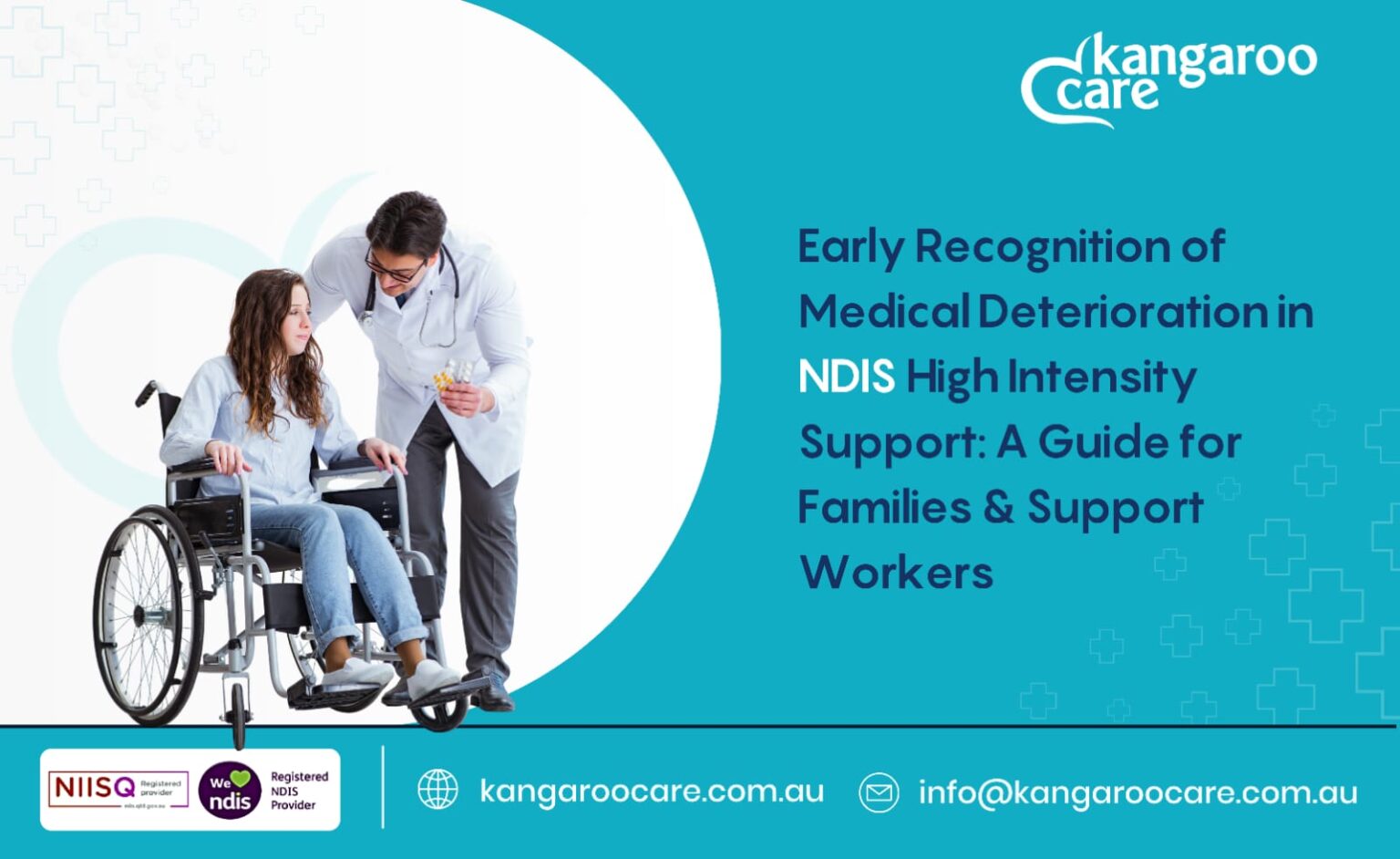
Early recognition of medical deterioration is one of the most critical safety responsibilities in the delivery of NDIS High Intensity Support in Brisbane. For participants with complex medical, physical, or psychosocial needs, small changes in health can escalate quickly if not identified and addressed early.
Within the NDIS, families, carers, and support workers play a frontline role in noticing early warning signs, escalating concerns, and ensuring participants receive timely clinical intervention. This guide explains what medical deterioration means in an NDIS context, why early recognition matters, and how it supports safe, compliant, and high-quality complex NDIS care in Brisbane.
What Is Medical Deterioration in NDIS Participants?
Medical deterioration refers to a decline in a participant’s physical, cognitive, or emotional health that may indicate a current or underlying illness, complication, or medical emergency.
In NDIS settings, deterioration may be linked to:
- Complex medical conditions
- High physical support needs
- Neurological or respiratory conditions
- Dysphagia or PEG feeding
- Epilepsy or seizure disorders
- Behavioural or psychosocial distress
For participants receiving NDIS High Intensity Support, early signs of deterioration will be recognised and appropriate treatment will be sought in a timely manner. NDIS service providers ensure that even small changes in health or behaviour do not go unnoticed or unmanaged. The focus is on identifying and responding to subtle changes early, rather than only reacting to sudden emergencies.
Why Early Recognition Matters in NDIS High Intensity Support
Early recognition of medical deterioration is essential because it:
- Prevents medical emergencies
- Reduces unplanned hospital admissions
- Protects participant safety and wellbeing
- Supports NDIS duty of care obligations
- Ensures continuity of support
For a registered NDIS provider in Brisbane, early recognition is also a key component of clinical governance, risk management, and compliance with NDIS Practice Standards.
Common Warnings Families & Support Workers Should Watch For
Support workers and families involved in NDIS High Intensity Support Brisbane services should be alert to changes such as:
Physical Changes
- Changes in breathing, coughing, or shortness of breath
- Fever, sweating, or chills
- Changes in skin colour (pale, flushed, bluish)
- Increased pain or discomfort
- Reduced mobility or sudden weakness
Behavioural & Cognitive Changes
- Increased confusion, agitation, or withdrawal
- Changes in sleep patterns
- Reduced engagement or responsiveness
- New or escalating behaviours of concern
Intake & Output Changes
- Reduced appetite or fluid intake
- Difficulty swallowing
- Changes in bowel or bladder patterns
- Decreased urine output
These early indicators are especially important for participants who may have communication barriers or difficulty expressing pain or discomfort.
The Role of NDIS Support Workers in Early Recognition
Support workers delivering complex NDIS care in Brisbane are often the first to notice subtle changes in a participant’s condition. Their role includes:
- Ongoing observation during daily supports
- Accurate documentation of changes
- Following escalation and emergency protocols
- Communicating concerns to supervisors or clinical teams
- Supporting timely medical review
Well-trained NDIS support workers understand that early escalation is not overreacting–it is a critical safety action.
Medical Deterioration in High Physical & Complex Support Cases
Participants requiring NDIS High Physical Support or intensive daily personal activities are at higher risk of rapid deterioration due to:
- Reduced mobility
- Dependence on medical equipment
- Higher infection risk
- Complex medication regimes
In SDA, SIL, and in-home NDIS support settings, early recognition ensures participants remain safe in their preferred living environment for as long as possible.
Supporting Families to Recognise Early Warning Signs
Families play a vital role in NDIS High Intensity Support Brisbane, particularly when participants live at home or transition between care settings.
Families should be supported to:
- Understand individual risk factors
- Recognise “what is normal” for their loved one
- Speak up early when something feels different
- Work collaboratively with support workers and providers
Strong communication between families, support workers, and providers leads to better outcomes and safer care.
Read more: The Ultimate 2026 Guide to Complex NDIS Care Services in Brisbane.
Early Recognition Saves Lives
Early recognition of medical deterioration is not just a clinical concept–it is a core safety responsibility within the NDIS. For participants with complex needs, timely action can mean the difference between early treatment and a medical emergency.
In NDIS High Intensity Support in Brisbane, families and support workers are essential partners in protecting health, dignity, and quality of life. With the right training, systems, and provider support, early recognition becomes a powerful tool for safer, more responsive NDIS care.
FAQs
1. Who is the best NDIS Service Provider in Brisbane?
Kangaroo Care is often regarded as one of the best NDIS service providers in Brisbane due to their person-centred approach, high standards of care, and commitment to delivering safe, responsive, and reliable support.
2. Why is early recognition important in NDIS High Intensity Support?
Participants receiving NDIS High Intensity Support often have complex medical needs, making early detection critical for safety and wellbeing.
3. Who is responsible for recognising medical deterioration?
Both NDIS support workers and families share responsibility, supported by providers’ clinical governance systems.
4. Is early recognition required under NDIS Practice Standards?
Yes. It forms part of duty of care, risk management, and safe service delivery under NDIS Practice Standards.
5. How does early recognition reduce hospital admissions?
By identifying issues early, participants can receive timely medical review or intervention before conditions worsen.
6. Does this apply to SDA and SIL settings?
Absolutely. Early recognition is essential in SDA, SIL, and in-home NDIS support environments, especially for high physical support participants.
7. Is NDIS High Intensity Support available in Brisbane?
Yes. Many registered NDIS providers in Brisbane, including Kangaroo Care, deliver high-quality NDIS High Intensity Support with strong clinical oversight.
8. What does early recognition of medical deterioration mean in the NDIS?
It means identifying early warning signs that a participant’s health is declining and taking timely action to prevent serious illness or emergencies.